For many Florida drivers, yes, a ceramic coating is worth it, as long as you understand what you are buying. It adds gloss, helps water and grime release from the paint, and makes washing easier in a place with strong sun, salt air, summer rain and two lovebug seasons a year.
It is not scratch-proof, chip-proof, maintenance-free or permanent, and it is not a replacement for paint correction. Whether it pays off depends on how you use your car, how you wash it and what condition the paint is in today.
Key takeaways
- A coating improves gloss, water beading, contaminant release and ease of washing. It does not stop scratches, rock chips or the need for regular washing.
- The coating seals in whatever is underneath it, so swirled or hazy paint usually needs paint correction first.
- Heat, humidity, dust and direct sun all affect how a coating goes on, so a garage or shaded area helps.
- Highness Mobile Detailing prices ceramic coating from $799, $999 or $1,199 by vehicle size, after a $50 estimate appointment.
- A coated car still needs careful hand washing, proper drying and prompt removal of bugs and droppings.
What is a ceramic coating?
A ceramic coating is a liquid applied to clean, prepared paint. As it cures, it bonds to the clear coat and forms a thin, hard protective layer.
Compared with wax or a typical sealant, it is designed to hold up longer under washing and weather. It also gives the paint a slick surface that grime has a harder time gripping.
The coating is very thin. It follows the surface it is applied to, including any scratches, swirls or haze underneath. That is why preparation is most of the job.
A ceramic coating locks in whatever is under it. If the paint is swirled when the coating goes on, the swirls stay, sealed under a glossier layer.
What can Florida drivers realistically expect from a coating?
A properly applied and maintained coating tends to improve four things:
- Gloss and depth. Coated paint usually looks richer and more reflective, especially when the paint has been corrected first.
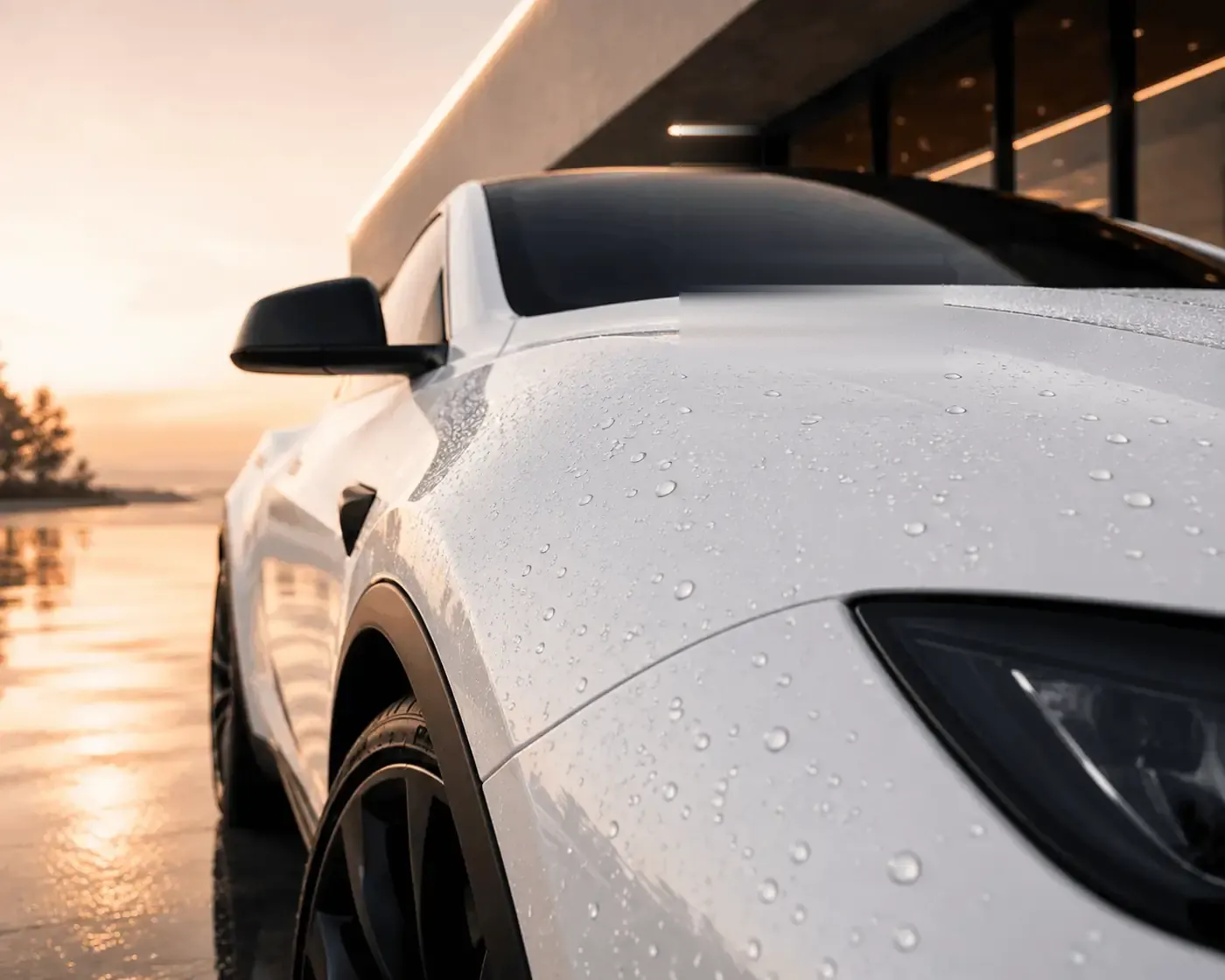
- Water behavior. Rain and rinse water bead up and roll off instead of sitting in sheets. During afternoon summer storms, the car sheds water more readily.
- Contaminant resistance. Lovebug residue, bird droppings, sap and road film have a harder time bonding to a slick surface, so they tend to come off with less effort.
- Easier washing. Dirt releases more easily during a wash. Less scrubbing means less chance of adding new wash marks.
Each of those comes with a “but,” and in South Florida the buts are worth spelling out.
What a coating will not do
- It is not scratch-proof. A coating can add some resistance to very light marring, but keys, branches, gritty towels and brush car washes will still scratch a coated car.
- It is not chip-proof. Rocks and road debris on I-95 or the Turnpike will still chip paint. Chip protection is a job for paint protection film, which is a different product.
- It does not neutralize acids. Lovebug residue and bird droppings are still acidic. A coating buys you some time and makes removal easier, but they can still mark the surface if left for days. Our guide to removing lovebugs, bird droppings and tree sap covers the safe way to handle them.
- It does not prevent water spots. Beading water that dries in direct sun can still leave mineral spots, especially with hard water from sprinklers. Drying the car after washing still matters.
- It is not maintenance-free. A coated car still needs regular, careful washing. Neglect lets grime build up on the coating and dulls how it performs.
- It is not permanent. How long a coating keeps performing depends on the product, how the car is stored, how often it is driven and how it is washed. We do not promise a number of years, and you should be cautious of anyone who does without knowing how your car lives.
Why does the Florida climate make coatings both useful and tricky?
The same conditions that make protection appealing in Palm Beach County also make coatings harder to apply well.
Why protection helps here
UV exposure breaks down clear coat and plastics over time, and cars that live outdoors in South Florida get a lot of it. Salt air near the coast, from Jupiter down to Boca Raton, leaves a film that holds moisture.
Lovebugs arrive twice a year, and sprinklers spray hard water on parked cars. A coating does not stop any of this. It gives the paint a durable sacrificial layer and makes cleanup faster, which shortens how long damaging material sits on the surface.
Our article on Florida sun, salt air and your car’s paint goes deeper into how the climate affects paint over time.
Why application is sensitive
Coatings react to their environment while they cure. Humidity, dust, direct sun and temperature all affect how the product flashes, levels and bonds.
Applying a coating on a hot panel in full sun, or on a windy day with sand in the air, risks high spots, streaks or trapped debris. Because Highness Mobile Detailing works at your home or workplace, a garage or covered, shaded spot is a real advantage.
If the weather or on-site conditions put the finish at risk, moving the appointment is the better choice than rushing it. After application, the coating also needs time to cure, and during that window the car should stay away from washing. The exact window depends on the product, so ask about it before the appointment ends.
Does paint correction come first?
In most cases, yes. Ask most detailers what makes or breaks a coating and the answer is preparation. The paint needs to be thoroughly washed, decontaminated and, in most cases, polished before the coating goes on.
On a car with visible swirls, haze or light defects, paint correction uses machine polishing to reduce those marks within the clear coat so the coating sits on a clearer surface. It cannot fix defects deeper than the clear coat, or failed or thin paint.
Skipping correction does not ruin the coating’s protective properties. It does mean you are sealing in marks you will see every time the car is in the sun. Our article on whether paint correction should come before ceramic coating covers how to decide.
Is a ceramic coating worth it for you?
It comes down to how the car lives and how it gets washed. A coating tends to make sense if several of these describe you:
- You plan to keep the car for a good while.
- It lives outdoors, in a driveway, a condo lot or an office parking lot.
- You wash it yourself or have it washed regularly by hand, and you want that to be faster.
- You are willing to correct the paint first, or the paint is already in good condition.
- You value gloss and easier upkeep enough to pay more up front.
It may not be the right choice if:
- You want something that means you never have to wash the car.
- You mainly want protection from rock chips.
- The paint has failing clear coat, which a coating cannot fix.
- You use brush-type automatic washes and plan to keep doing so.
- Your budget is better spent on regular details and a good sealant for now.
How does a coating compare with wax and sealant?
| Factor | Wax or spray sealant | Ceramic coating |
|---|---|---|
| Up-front cost | Low | Higher, with paint prep |
| How often it needs reapplying | Frequently | Much less often, depending on care |
| Ease of washing | Improves for a short time | Noticeably easier with proper maintenance |
| Prep required | Clean paint | Washed, decontaminated and usually corrected paint |
| Weather sensitivity during application | Low | High |
There is also a middle path. The Complete Detail includes a paint sealant lasting up to 6 months along with a full interior and exterior clean.
The Premium Restoration Detail adds a clay bar treatment and a single-pass machine wax and buff. Neither is a ceramic coating, but for some owners a regular detail with sealant is the more sensible step right now.
How much does ceramic coating cost with Highness Mobile Detailing?
Ceramic coating is priced from a starting point by vehicle size:
| Vehicle size | Ceramic coating |
|---|---|
| Sedan / Coupe | From $799 |
| SUV / Truck | From $999 |
| Van / XL | From $1,199 |
Every ceramic coating job starts with a $50 estimate appointment. That visit is the time to look at the paint, talk through what you want from a coating and what it will and will not do on your car.
The final price depends on the paint’s condition and how much preparation it needs, including whether paint correction is required. You can see how coating fits with the other services on the pricing page.
How do you care for a coated car?
The routine is simple. It just has to be consistent:
- Rinse thoroughly before touching the paint to remove sand and grit.
- Wash with a pH-neutral shampoo, a clean wash mitt and two buckets.
- Dry with clean, soft microfiber towels rather than letting water dry in the sun.
- Remove bugs, droppings and sap promptly, even though they release more easily.
- Avoid brush-type automatic washes and harsh household cleaners.
- Schedule periodic professional washes, such as a Maintenance Detail, so someone checks the surface regularly.
FAQ
How long does a ceramic coating last in Florida?
It depends on the product, how the car is stored, how much it is driven and how it is washed. We do not quote a number of years because those factors are outside our control. Careful washing and prompt removal of contaminants help a coating keep performing.
Can a ceramic coating be applied outdoors?
Sometimes, with the right conditions. Shade, low wind and manageable humidity are needed. If the weather puts the finish at risk, rescheduling is the safer choice.
Do I still need to wax a coated car?
Generally no. Wax can mask the coating’s surface behavior. A coating-safe maintenance spray after washing is a better choice if you want to refresh the slickness.
Does a ceramic coating hide scratches?
No. It can make paint look glossier, but scratches and swirls under the coating remain visible. That is why correction usually comes first.
Book a ceramic coating estimate
Florida conditions and your paint’s current state both shape the answer, so the most useful next step is having someone look at the car in person. Read more on the Ceramic Coating page, then book your $50 estimate appointment anywhere in Palm Beach County. We work every day from 7:30 AM to 7:30 PM, and you can call (728) 219-4101 with questions first.