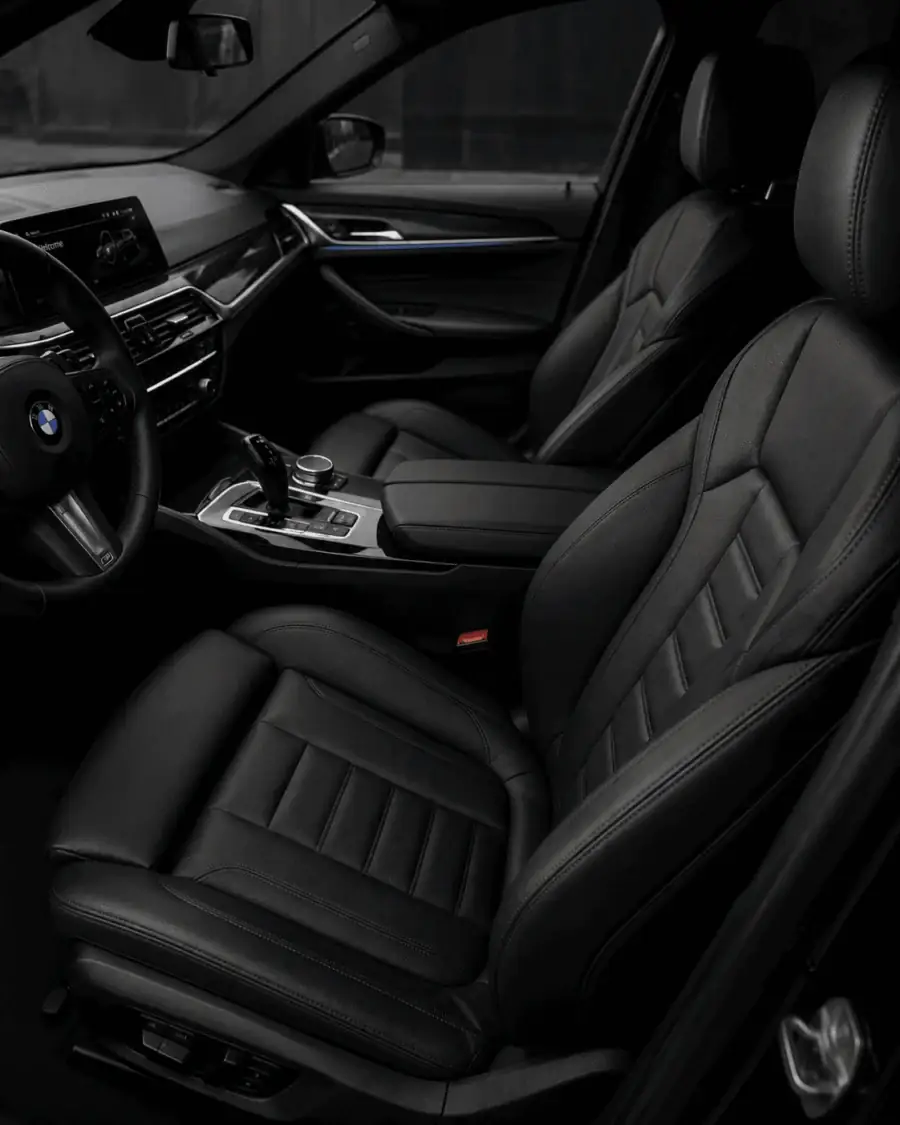
Car odor removal works when you find the source of the smell and clean it out, because most odors live in seat foam, carpet padding, surface residue or trapped moisture rather than in the air. Air fresheners only cover a smell for a while, and ozone treatment can reduce what is left after cleaning. Many odors can be reduced a lot, but heavy long-term smoke and urine soaked deep into padding may never fully go away.
This article covers the three odors we hear about most in Palm Beach County: cigarette smoke, mildew and pets. For each one, you will see where the smell comes from, what you can do yourself, what a detail adds and where the honest limits are.
Key takeaways
- Most car odors live in seat fabric and foam, carpet padding, the headliner, residue on hard surfaces or the air system.
- Cigarette smoke is the hardest odor to reduce, and a car smoked in daily for years may keep a faint smell.
- A musty smell almost always means water got in. Fix the leak before cleaning, or the smell returns.
- Ozone reduces odors as a finishing step after cleaning, in an empty cabin that is ventilated afterward. It does not remove residue or dry wet padding.
- Interior Detailing is the usual base for odor work, with Shampoo Treatment and Extraction and Ozone Treatment added when needed.
Where do car odors come from?
A car cabin is a small, closed box full of absorbent material. Smells settle into it and get released again every time the sun heats the interior. Before you clean anything, it helps to know the usual hiding places:
- Seat fabric and foam. Cloth seats absorb smoke, sweat and spills. Liquid that gets through the fabric reaches the foam underneath.
- Carpet and padding. The carpet you see sits on padding that can hold moisture and residue long after the surface feels dry.
- The headliner. Smoke rises, and the ceiling fabric absorbs it. Headliners are glued in place, so they need gentle cleaning with little moisture.
- Hard surfaces and glass. Smoke leaves an oily film on the dash, vents, door panels and the inside of the windows.
- The air system. A dirty cabin air filter, or moisture around the AC evaporator, can make the whole car smell every time the fan runs.
- Hidden spots. Under the seats, the seat rails, child seats, door pockets and the spare tire well, where water can collect unnoticed.
Why is cigarette smoke so hard to remove?
Smoke is not just a smell. It leaves a sticky residue of tar and nicotine on every surface in the cabin. You can see it as a yellow-brown haze on the inside of the windshield and as a film that smears when you wipe the dash.
The odor comes off that residue and out of the porous materials that absorbed it: seat foam, carpet, the headliner and the fabric on the door panels.
Effective smoke odor work has to reach all of those surfaces.
That means cleaning every hard surface including the vents and inside glass, deep cleaning the fabrics, gently cleaning the headliner and replacing the cabin air filter. A mechanic or the owner’s manual can help with the filter. After that, an ozone treatment can reduce the odor that remains in places brushes and extraction cannot reach.
Even with all of that, a car that was smoked in daily for years may still have a faint smell, especially on hot days when heat draws odor out of the foam. If smoking continues in the car, the smell comes back.
What causes mildew and musty smells in a Florida car?
South Florida’s humidity, sudden storms and the habit of cracking the windows in summer make musty odors common here. Mildew grows where moisture sits in the dark, and a car has plenty of those spots.
Find the water first
A musty smell almost always means water got in somewhere. Common sources include:
- A window left open in a storm
- Worn door or window seals
- Clogged sunroof drains or a leaking windshield seal
- A blocked AC drain
- A wet umbrella or beach towels left on the floor
Press a dry towel firmly into the carpet in the footwells and the trunk. If it comes up damp, the padding underneath is holding water.
If you clean the carpet without fixing the leak, the smell returns after the next rain. Leaks are a repair job for a body shop or mechanic, not something a detail fixes.
What a detail can and cannot do for mildew
Once the water source is fixed, cleaning and extracting the affected carpet and fabric, drying the cabin thoroughly and following with ozone can reduce a musty odor a lot.
There are limits. Padding that is soaked through may need to be pulled and dried or replaced, which is shop work. Widespread mold growth on the carpet, seats or headliner may be beyond what a detail should handle, and we will tell you so.
One more clue: if the smell is strongest right after you turn on the AC, the source is often the evaporator or its drain. That points to a mechanic, not a detailer.
How do you get pet odors out of a car?
Dogs bring oils from their coat, dander, drool, sand from the beach and the smell of a wet dog after a rainy walk. Most of that settles into the seat fabric and carpet.
Accidents are a different level. Urine and vomit soak through the fabric into the foam or padding, and the residue keeps releasing odor until it is broken down and removed. For pet odors, work in this order:
- Remove the hair first, because hair holds oils and odor. Our guide on how to remove pet hair from car seats and carpet covers this step.
- Clean the fabric and carpet where your pet rides, using a cleaner suited to organic residue. Enzyme-based cleaners are designed to break down this kind of residue.
- Extract the dirty solution so it does not sit in the fabric.
- Dry the area well, then treat the remaining odor.
Accidents and other biological contamination take more time and care. Mention them when you book so the work can be planned properly.
What does not work, or only hides the smell?
Most store-shelf fixes mask odors rather than remove them. Some are harmless. A few make the problem worse.
- Air fresheners and scented sprays. They add a stronger smell on top of the old one. When they fade, the original odor is still there.
- Baking soda on the carpet. It can absorb some surface odor if you leave it and vacuum it out thoroughly. It does not reach the padding or the foam.
- Charcoal bags and coffee grounds. They may absorb a little odor from the air. They do not touch the source.
- Soaking the carpet with soapy water. Without proper extraction and drying, this leaves residue and moisture behind, which can turn a pet or food smell into a mildew smell.
- Ozone without cleaning. Treating a dirty cabin leaves the source in place, so the odor tends to return.
How does ozone treatment work, and what are its limits?
Ozone is a reactive form of oxygen. When an ozone generator runs inside a closed cabin, the gas reaches into fabric, foam and air vents and reacts with many of the odor molecules it contacts. That is why it can reach places brushes and extraction cannot.
It is also strong stuff, so safety comes first. Ozone irritates the lungs, so the treatment runs with no people or pets inside, and the cabin is opened and ventilated before anyone rides in it.
You may notice a sharp, clean smell right after treatment, which fades as the car airs out. Exposure is kept controlled because too much over a long period can be hard on rubber and some interior materials.
Ozone reduces odors. It does not remove residue, dry wet padding or fix a leak, and complete elimination is never promised. It works as a finishing step after the source has been cleaned.
The Ozone Treatment add-on from Highness Mobile Detailing starts from $85 for a sedan or coupe, $110 for an SUV or truck and $145 for a van or XL vehicle.
What is a realistic car odor removal plan?
Whether you do part of this yourself or book a detail, the order is the same:
- Find the source. Sniff low and high, check under the seats and in the trunk, and press towels into the carpet to check for moisture.
- Remove it. Throw out trash, forgotten food and old gym clothes. Get leaks repaired.
- Vacuum everything, including seams, seat rails and the trunk.
- Clean the hard surfaces and glass. This matters most for smoke.
- Deep clean the fabrics. Shampoo and extraction pull residue out of seats and carpet.
- Replace the cabin air filter if it is due.
- Dry the cabin completely. Moisture left behind starts the cycle again.
- Treat what remains with ozone, in an unoccupied cabin that is ventilated afterward.
| Odor | Usual source | What helps most | Honest limit |
|---|---|---|---|
| Cigarette smoke | Residue on surfaces, foam, headliner | Full interior cleaning, then ozone | Long-term smoke may leave a faint smell |
| Mildew | Water in carpet padding, leaks | Fix the leak, extract, dry, then ozone | Soaked padding or mold may need shop work |
| Pets | Oils, dander, hair, accidents | Hair removal, fabric cleaning, extraction | Urine deep in padding is hard to reach |
| Food and spills | Residue in carpet and seats | Targeted cleaning and extraction | Old dairy spills can linger |
Which Highness service fits an odor problem?
For most odor jobs, Interior Detailing is the base. It includes a comprehensive vacuum, high-temperature steam cleaning and sanitization, deep cleaning of the dashboard, console, cup holders and door panels, disinfected air vents, cloth seats shampooed or leather seats cleaned and conditioned, and interior glass. It runs $199, $249 or $299 by vehicle size and takes about 2.5 hours.
Add Shampoo Treatment and Extraction ($95, $125 or $150) when the smell sits in the seats, carpets and mats. Stains may lighten without fully disappearing.
Pet Hair Removal is $75 for all sizes, and severe embedded hair is quoted after photo review. Ozone Treatment then reduces what remains.
For cars with heavy smoke, long neglect or several problems at once, the Premium Restoration Detail takes about 6 hours. It includes everything in the Complete Detail, plus shampoo treatment and extraction of seats, carpets and mats and more intensive hard-surface cleaning and scrubbing.
It runs $499, $599 or $699. Photos help match the car to the right option.
FAQ
Can a detailer remove car odors completely?
Not always. Often the odor is reduced so much you stop noticing it. Sometimes a faint smell remains, especially with long-term smoke or urine in the padding.
Is ozone treatment safe?
Ozone irritates the lungs, so it only runs in an empty cabin with no people or pets inside, and the car is ventilated before anyone rides in it. Used that way, as a controlled finishing step, it is a common odor-reduction method.
Will the smell come back?
It can, if the source returns. Smoking in the car again, an unrepaired leak or new pet accidents will bring odors back. Heat can also draw out residue that was deep in foam.
Can a detail fix a smell that comes from the AC?
A detail cleans the cabin and disinfects the vents, but a musty smell that starts when the AC kicks on often comes from the evaporator or a clogged drain. That is a job for a mechanic.
Book an odor-focused detail
Highness Mobile Detailing comes to your home or workplace anywhere in our Palm Beach County service area, every day from 7:30 AM to 7:30 PM. Tell us what the smell is and where it seems strongest, and share a few photos. Book a detail online or call (728) 219-4101, and you pay on site after the work.