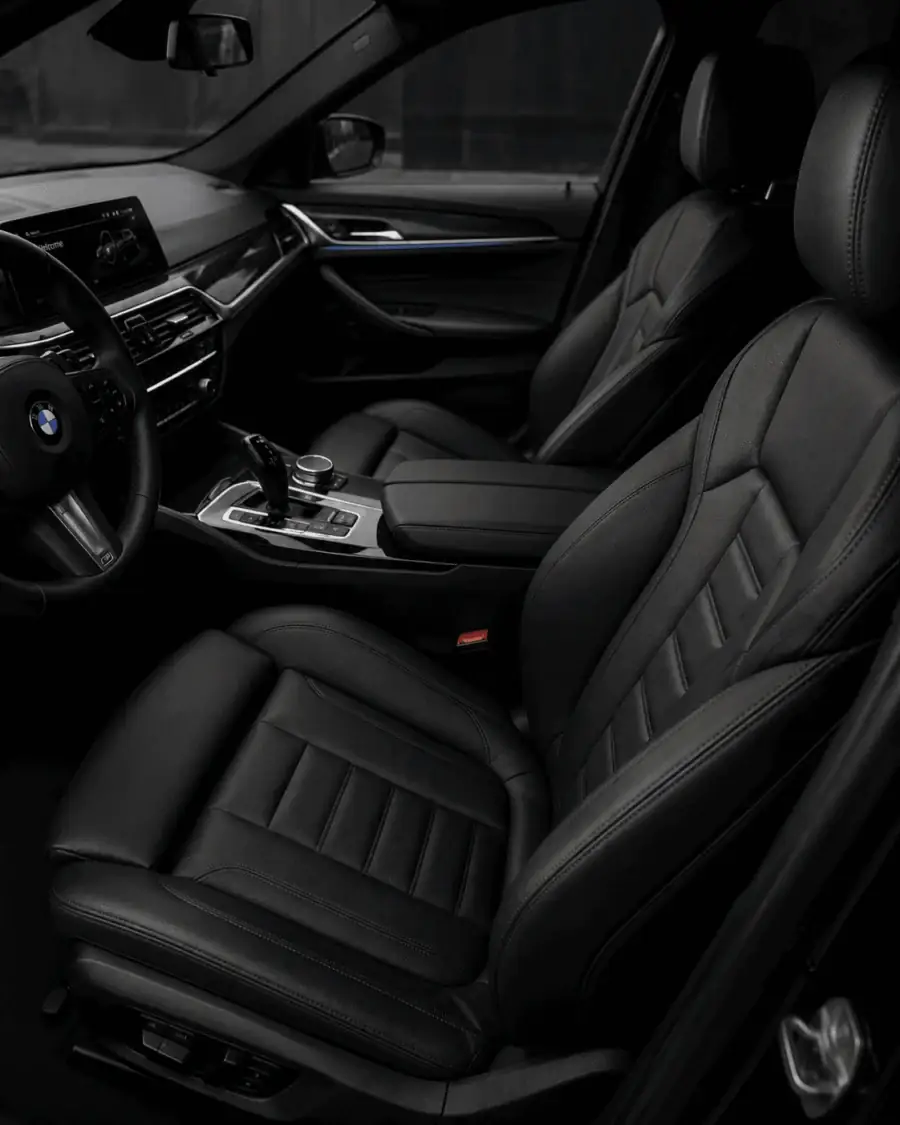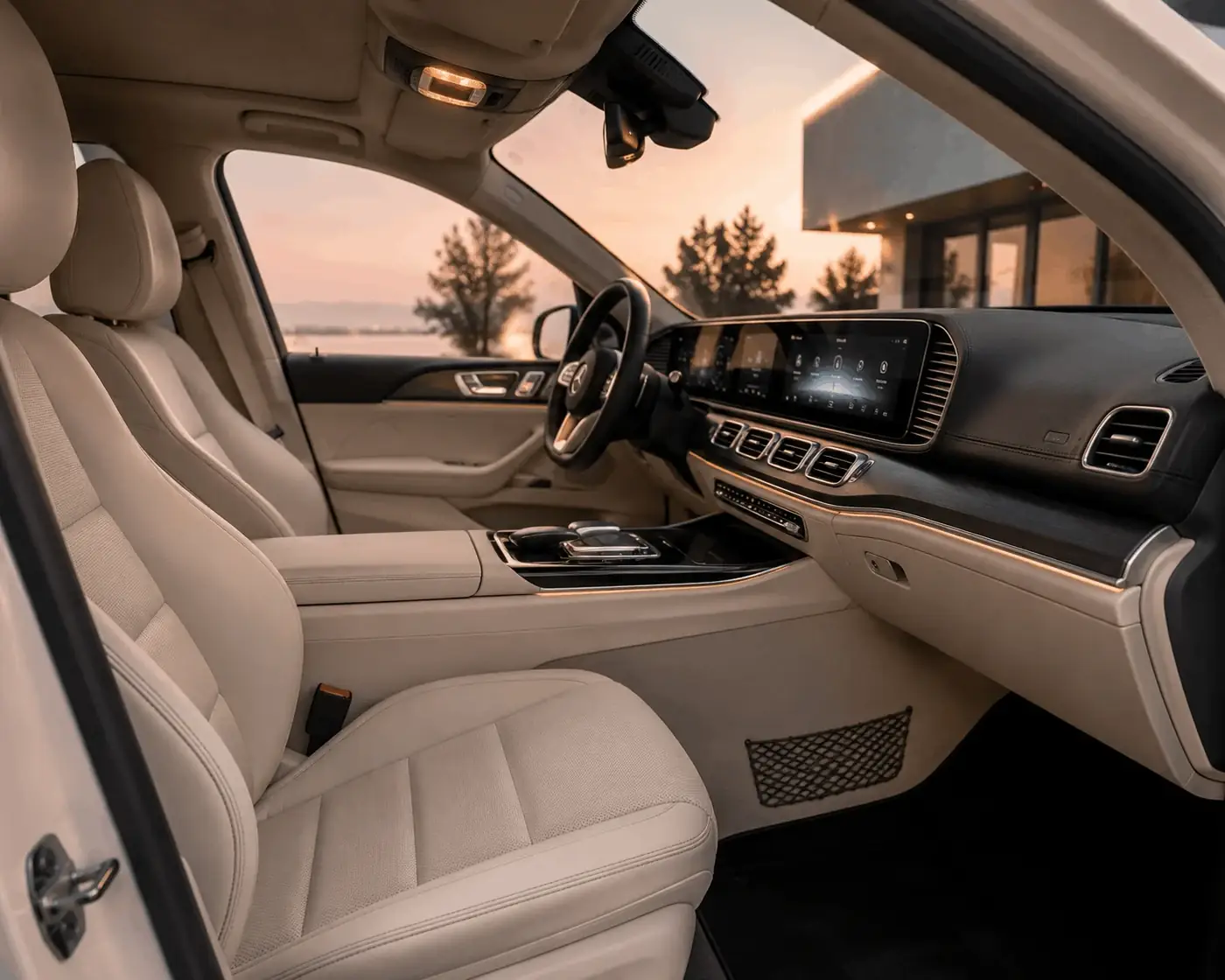
To remove pet hair from car seats and carpet, vacuum the loose hair first, use a rubber tool or pet hair stone to drag the woven-in hair out of the fibers, then vacuum again and clear the seams with compressed air or a stiff brush. That handles light to moderate hair. Heavy buildup pressed in over months takes hours, and some hairs stay put no matter who does the work.
Key takeaways
- A vacuum alone lifts the loose top layer. Agitation with rubber or a pet hair stone is what pulls woven-in hair out.
- Work in order: empty the car, do the mats outside, dry vacuum, agitate, vacuum again, then clear seams and hidden spots.
- Keep pet hair stones on durable carpet and mats only. They can damage seat cloth, headliners, leather and plastic.
- Avoid soaking the carpet. Wet hair mats harder, and damp carpet in Florida heat can start to smell musty.
- Nobody can honestly promise every hair comes out. Expect a large, visible reduction, not a perfect result.
Why is pet hair so hard to remove from a car?
It helps to understand what you’re fighting before you pick up a tool. Three things decide how stubborn the job will be: the type of hair, the type of fabric and how long the hair has been there.
Hair type
Short, coarse hair with tapered ends behaves like a needle. It slides into the gaps of a woven fabric and anchors itself. Many short-coated dogs shed this kind of hair, and it is usually the hardest to get out.
Long, soft hair and fluffy undercoat are easier to see but tend to mat into clumps and wrap around carpet fibers. Double-coated dogs often shed heavily in seasons, so the problem can seem to double overnight.
Fabric type
Automotive carpet is dense and low, and the felt-like carpet used in many trunks and SUV cargo areas grabs hair aggressively. Cloth seats with a textured weave hold hair in every groove.
Leather and vinyl don’t trap hair in the surface. The seams, perforations and the gaps between the seat and the console collect it, though, and it packs into seat rails and under the seats.
Time and pressure
Every time someone sits down or your dog shifts around on a turn, hair gets pressed a little deeper. Body oils and dander help it cling.
Hair that would have lifted easily after one trip can be locked in after a few months of daily rides. That’s why a cargo area that has carried a dog for a year is a different job from a back seat that had one beach trip.
Which tools actually help?
You don’t need a garage full of gadgets. A few inexpensive tools do most of the work, as long as you use them in the right order.
- A vacuum with real suction. A crevice tool for seams and a brush attachment for upholstery. Weak handheld vacuums struggle with embedded hair.
- A rubber tool. A slightly damp rubber dish glove, a rubber squeegee or a rubber-bristle pet hair brush. Rubber creates friction that rolls hair out of the fibers and gathers it into clumps you can vacuum.
- A pumice-style pet hair stone. Very effective on durable carpet and floor mats. It is abrasive, so test it in a hidden spot and keep it off soft fabrics, the headliner, leather and plastic.
- A stiff detailing brush or compressed air. For seat seams, seat rails, vents and the gap where the seat meets the console.
- A lint roller. Good for finishing cloth seats after the heavy work is done. It won’t do much on carpet.
- A spray bottle with plain water or a diluted fabric cleaner. A light mist reduces static and helps hair release. A light mist, not a soaking.
What to use on each surface
| Surface | What works | What to avoid |
|---|---|---|
| Carpet and floor mats | Rubber brush or pet hair stone, then vacuum | Soaking the carpet with water |
| Cloth seats | Rubber glove or brush, vacuum, lint roller to finish | Pet hair stones and stiff wire brushes |
| Leather and vinyl | Vacuum seams, wipe surfaces with a damp microfiber towel | Abrasive tools of any kind |
| Headliner | Gentle lint roller or soft brush only | Scrubbing, stones, heavy moisture |
| Seams, rails, vents | Compressed air or a stiff brush, then vacuum | Forcing tools into gaps and scratching trim |
How do you remove pet hair from car carpet and seats, step by step?
Order matters. If you start with the rubber brush before vacuuming, you push sand and loose hair around and make the job longer. Work from the top of the cabin down and save the cargo area for last.
- Empty the car. Take out the floor mats, the dog bed, toys, car seats and anything in the door pockets. You can’t clean around clutter.
- Do the mats outside. Shake them out, knock them against a wall, then work them with a rubber brush or pet hair stone and vacuum. Rubber mats can be rinsed and dried.
- Do a dry vacuum pass. Take the loose hair, sand and crumbs first. In South Florida there is almost always sand in the carpet, and it grinds against fibers if you scrub over it.
- Agitate with rubber. Use short strokes in one direction. The hair will start to roll into lines and clumps. On carpet, this is where a pet hair stone earns its keep.
- Vacuum the clumps. Then repeat the rubber pass on the same section. Most areas need two or three rounds.
- Clear the seams. Use compressed air or a brush to push hair out of seat seams, rails and the console gap toward an area you can reach with the vacuum.
- Finish the seats. A lint roller picks up the last surface hairs on cloth. Wipe leather with a damp microfiber towel.
- Check the hidden spots. Under the seats, the seat belt buckles, the third-row folds, the spare tire cover and the trunk edges. Hair collects anywhere air doesn’t move.
Be realistic about time. A back seat with light shedding might take half an hour. A cargo area that has carried a large shedding dog for months can take far longer, and your hands and back will feel it.
What mistakes make the job harder?
Most failed attempts come from a few common mistakes. Avoid these and the job goes faster.
- Wetting the carpet heavily. Wet hair mats and sticks harder. Damp carpet in a closed car in Florida heat can also start to smell musty.
- Using a pet hair stone on soft fabric. It can pill, fuzz or tear seat cloth and headliner material. Keep it for durable carpet and mats.
- Relying on tape. Packing tape grabs surface hair but can leave adhesive behind, especially on warm fabric.
- Skipping the first vacuum pass. Scrubbing sand and grit into the carpet wears the fibers.
- Expecting the vacuum to do it alone. Suction doesn’t break the grip of woven-in hair. Agitation does.
What about dander, stains and odor?
Pet hair rarely shows up alone. It comes with dander, nose prints on the windows, drool on the door panels, muddy paw marks and that wet-dog smell after a rainy walk. Removing the hair is one part of the job. The oils and residue in the fabric are another, and a vacuum doesn’t touch them.
Interior Detailing at Highness Mobile Detailing includes a comprehensive vacuum of seats, carpets, mats, trunk and crevices, high-temperature steam cleaning and sanitization, deep cleaning of the dashboard, console, cup holders and door panels, disinfected air vents, and cloth seats shampooed or leather seats cleaned and conditioned. Interior glass, mirrors and door jambs are cleaned too.
If carpets and mats are soiled as well as hairy, the Shampoo Treatment and Extraction add-on covers seats, carpets and mats ($95 / $125 / $150 by vehicle size). Stains may lighten without fully disappearing. For a smell that lingers after cleaning, an Ozone Treatment (from $85 / $110 / $145) can reduce odors, but complete elimination is not guaranteed. Our guide to car odor removal for smoke, mildew and pets covers that side in more detail.
A note on allergies: removing hair and cleaning fabric reduces the amount of hair and dander in the cabin. It does not make a car allergen-free, and a sensitive passenger may still react.
How do you keep pet hair from building up again?
The easiest pet hair to remove is the hair that never reaches the carpet. A few habits make a big difference.
- Use a seat cover or hammock for the back seat and a washable liner for the cargo area. Wash them often.
- Brush your dog before car rides, especially during heavy shedding.
- Put a towel or blanket in your pet’s usual spot. Shake it out after each trip.
- Keep a rubber brush in the car and do a quick pass every week or two before the hair gets pressed in.
- Keep the windows clean. Nose prints and drool come off easily when they’re fresh.
For a full routine between professional visits, read how to keep your car clean between details.
When should you call a detailer for pet hair removal?
DIY works well for light shedding and regular upkeep. It stops making sense in a few situations:
- Hair is embedded across a large carpeted area, like an SUV cargo floor or a van.
- Several pets ride in the car, or the car has gone months without a deep clean.
- There’s odor, staining or accident residue along with the hair.
- You’re returning a lease or getting ready to sell, and you want the interior easier to present.
- You simply don’t have the hours.
Highness Mobile Detailing offers a Pet Hair Removal add-on for $75 on any vehicle size. Severe embedded hair is quoted after we review photos, so send a few pictures of the worst areas.
Pair it with a package that fits the rest of the interior. The Maintenance Detail is meant for cars already in manageable condition, not embedded pet hair or heavy soiling, so most pet owners start with Interior Detailing or the Complete Detail, which is our usual first recommendation.
| Service | Sedan/Coupe | SUV/Truck | Van/XL |
|---|---|---|---|
| Pet Hair Removal add-on | $75 | $75 | $75 |
| Interior Detailing (about 2.5 hours) | $199 | $249 | $299 |
| Complete Detail (about 3.5 hours) | $299 | $349 | $399 |
| Shampoo Treatment and Extraction add-on | $95 | $125 | $150 |
Heavy pet hair, embedded sand and accident residue all take longer than a typical interior. You can see every package side by side on our pricing page.
Can a professional get every hair out? No. Some hairs are woven so deeply into carpet that removing them would mean damaging the fibers. What you can expect is a large, visible reduction and a cabin that feels clean to sit in.
FAQ
Can you remove all pet hair from a car?
Not every hair. Most loose and surface hair comes out, and a careful process removes a lot of the embedded hair too. A few deeply woven hairs usually remain, especially in older cargo carpet.
How long does professional pet hair removal take?
It depends on the amount of hair, the size of the vehicle and the carpet type. Interior Detailing takes about 2.5 hours on its own, and heavy pet hair adds time.
Will a pet hair stone damage my seats?
It can. Pumice-style stones are abrasive. They’re useful on durable carpet and mats but can damage soft seat cloth, headliners, leather and plastic. Test first and keep them on the floor.
Do you come to me?
Yes. We work at your home or workplace across Palm Beach County. See our service areas for the communities we cover. If you live in a condo or HOA community, check that on-site detailing is allowed first.
Book pet hair removal
If the hair has gotten ahead of you, add Pet Hair Removal to an Interior Detailing or Complete Detail. We work every day from 7:30 AM to 7:30 PM, and payment is on site, after the work. Book a detail or call (728) 219-4101, and send a few photos of the worst areas so we can plan the time properly.